Education & Resources

Practical articles and guides on living soils, SAP analysis and the science of orchard ecology restoration—written for commercial orchardists, not academics.

Living Soils & Orchard Nutrition Insights

Every article is written at a practical level and focused on the questions commercial orchardists actually ask.

Three jars of fish input side by side — thin brown emulsion, rich amber hydrolysate, and living fermented silage
Biostimulants

Fish Emulsion vs Fish Hydrolysate vs Fish Silage—Which Builds Soil and Roots Faster?

Three products, all made from fish, all sold as the same thing—and they are not. How the process behind each one decides whether it feeds your soil biology or just adds nitrogen, with field microBiometer results from a North Coast macadamia block.

Read Article →
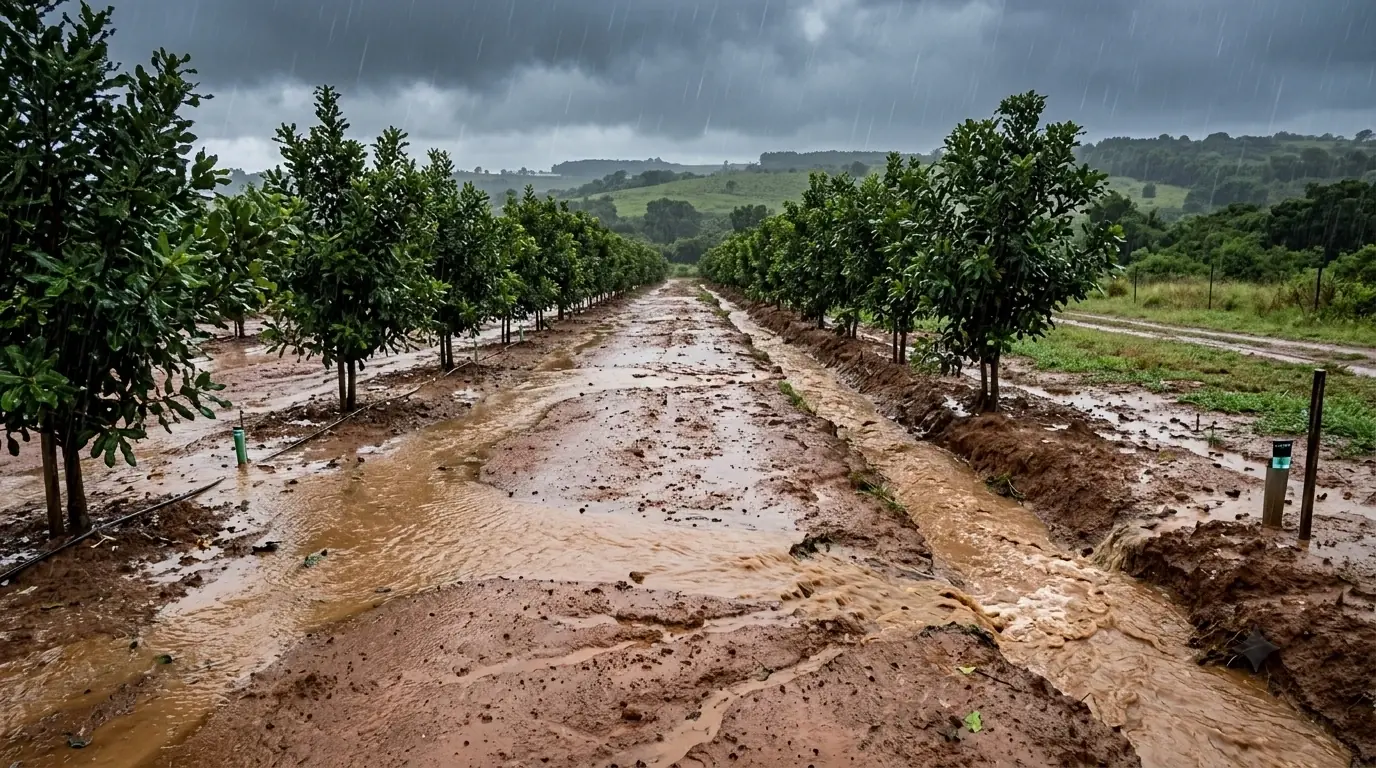
Heavy rain sheeting across the bare interrows of a young macadamia orchard, cutting erosion channels and carrying topsoil off the block
Transition Economics

Soil Carbon Credits for South African Orchards: What the Science Actually Says

What a carbon credit is really worth on a macadamia block, how VM0042 calculates it, and why the credit cheque is the smallest of the three returns. The arithmetic nobody else is publishing.

Read Article →
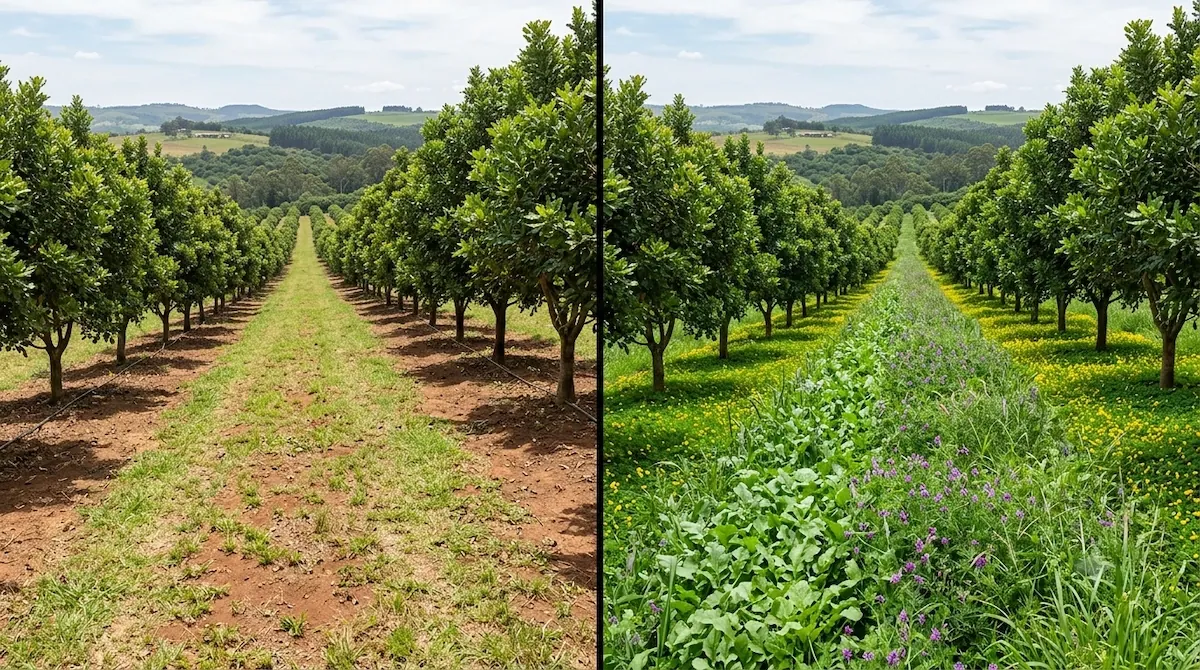
Split view of a macadamia orchard interrow: bare sprayed soil on the left, a dense green cover-crop mix on the right
Cover Crops

Cover Crops: How a Living Orchard Floor Works for Your Trees

A bare orchard floor is a wasted asset. How the right living cover fixes compaction and acidity, feeds free nitrogen, and cuts your fertiliser, water and spray bills—across macadamias, avocados, citrus, litchis and mangoes.

Read Article →
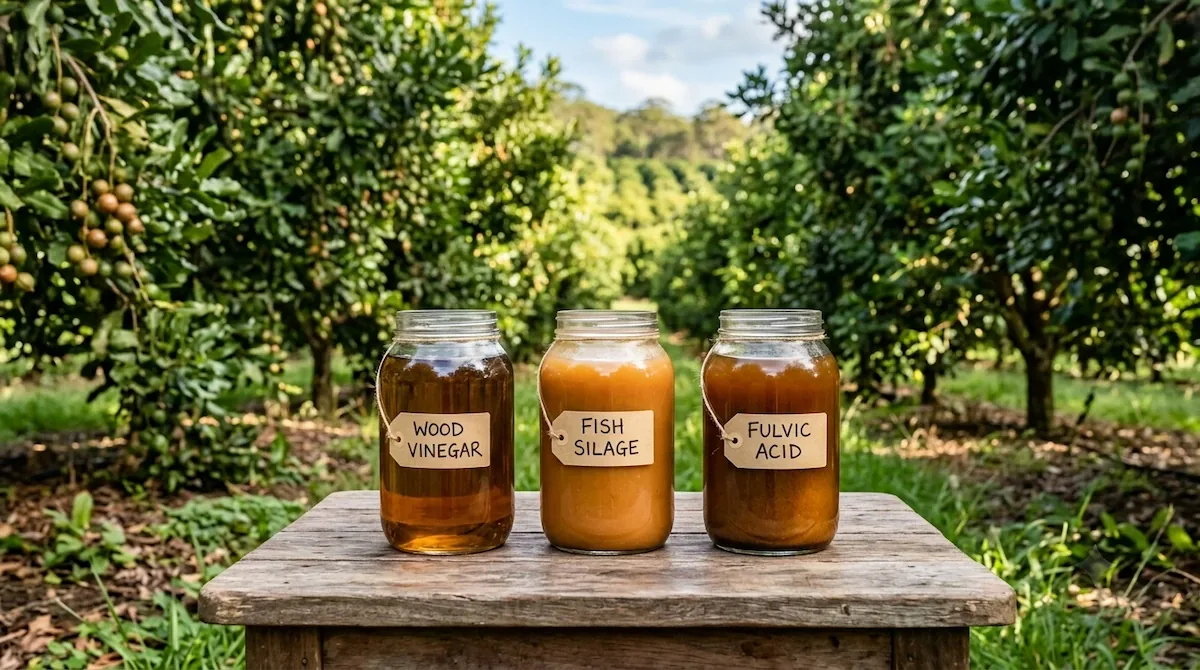
Three glass jars labelled Wood Vinegar, Fish Silage and Fulvic Acid on a wooden table in a macadamia orchard
Biostimulants

Wood Vinegar, Fish Silage and Fulvic Acid—What Each One Does in Your Orchard

Three biostimulants every grower hears about, explained without the hype. What each one actually is, how it works on the plant, and how to use all three safely on macadamias, avocados and lemons.

Read Article →
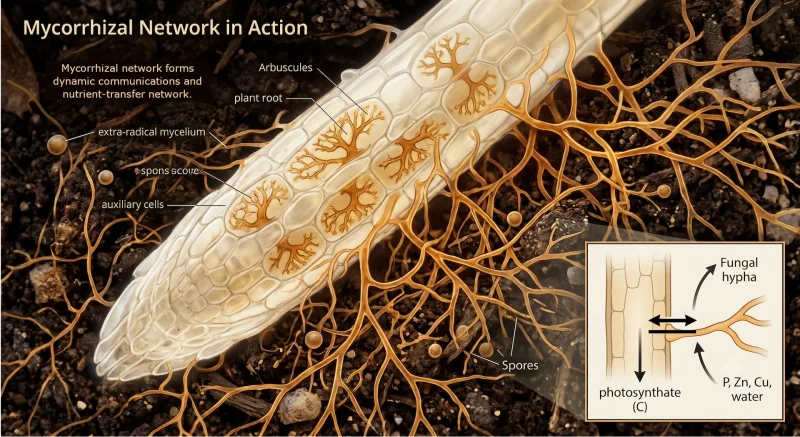
Mycorrhizal fungal network connecting tree roots in orchard soil
Soil Biology

Why Fungally Dominant Soils Are the Foundation of Plant Immunity

How the fungal-to-bacterial ratio in your soil determines whether your crop fights off pests and diseases on its own, or leans on a spray programme to stay alive.

Read Article →
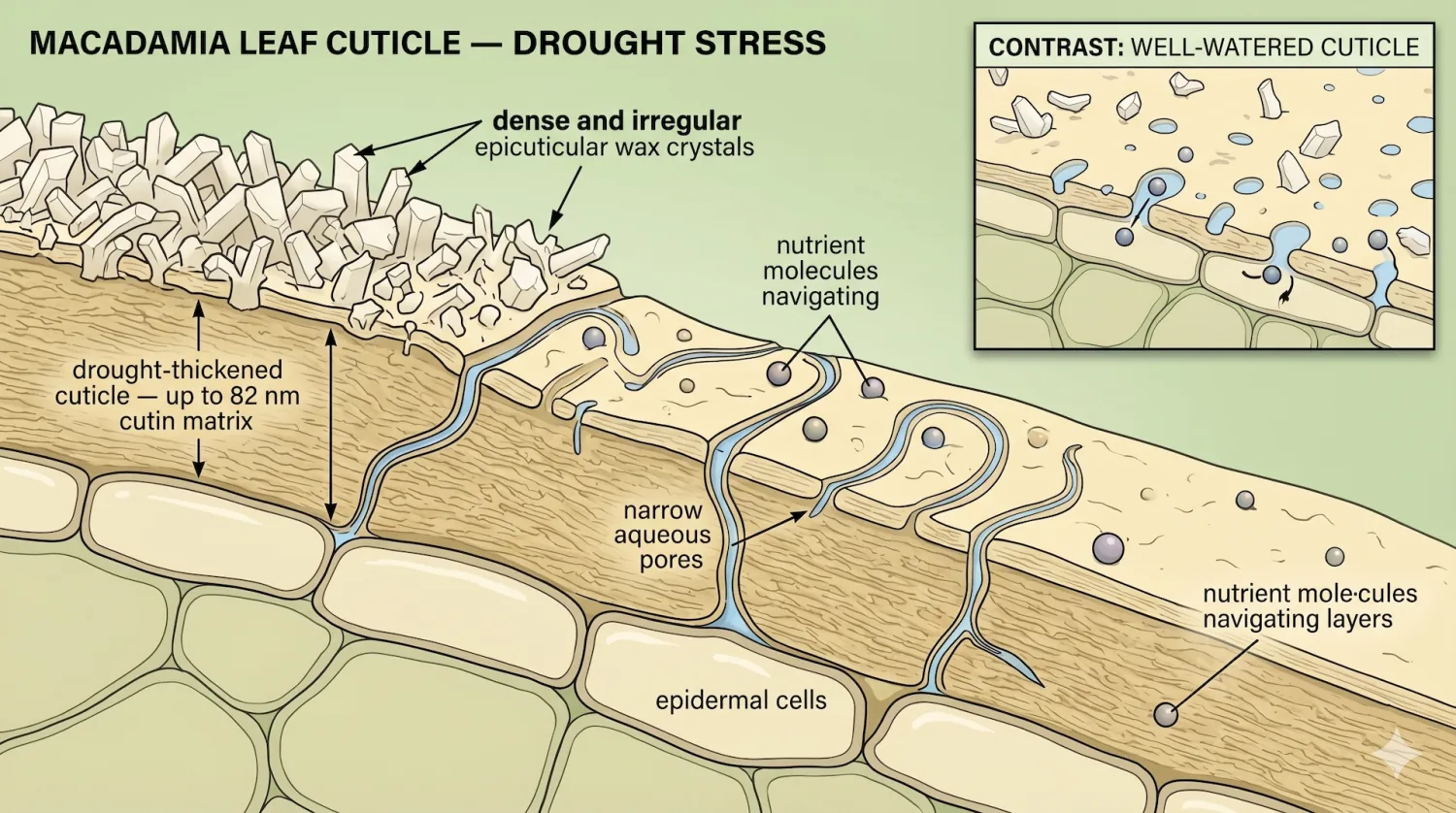
Drought-stressed leaf cuticle showing nutrient immobilisation effects
Soil Biology

Why Drought Shuts Down Soil Nutrition—And What You Can Do About It

Drought doesn’t destroy soil nutrients—it immobilises them. Here’s how it shuts down the system your trees depend on, and why foliar feeding becomes the only viable pathway.

Read Article →
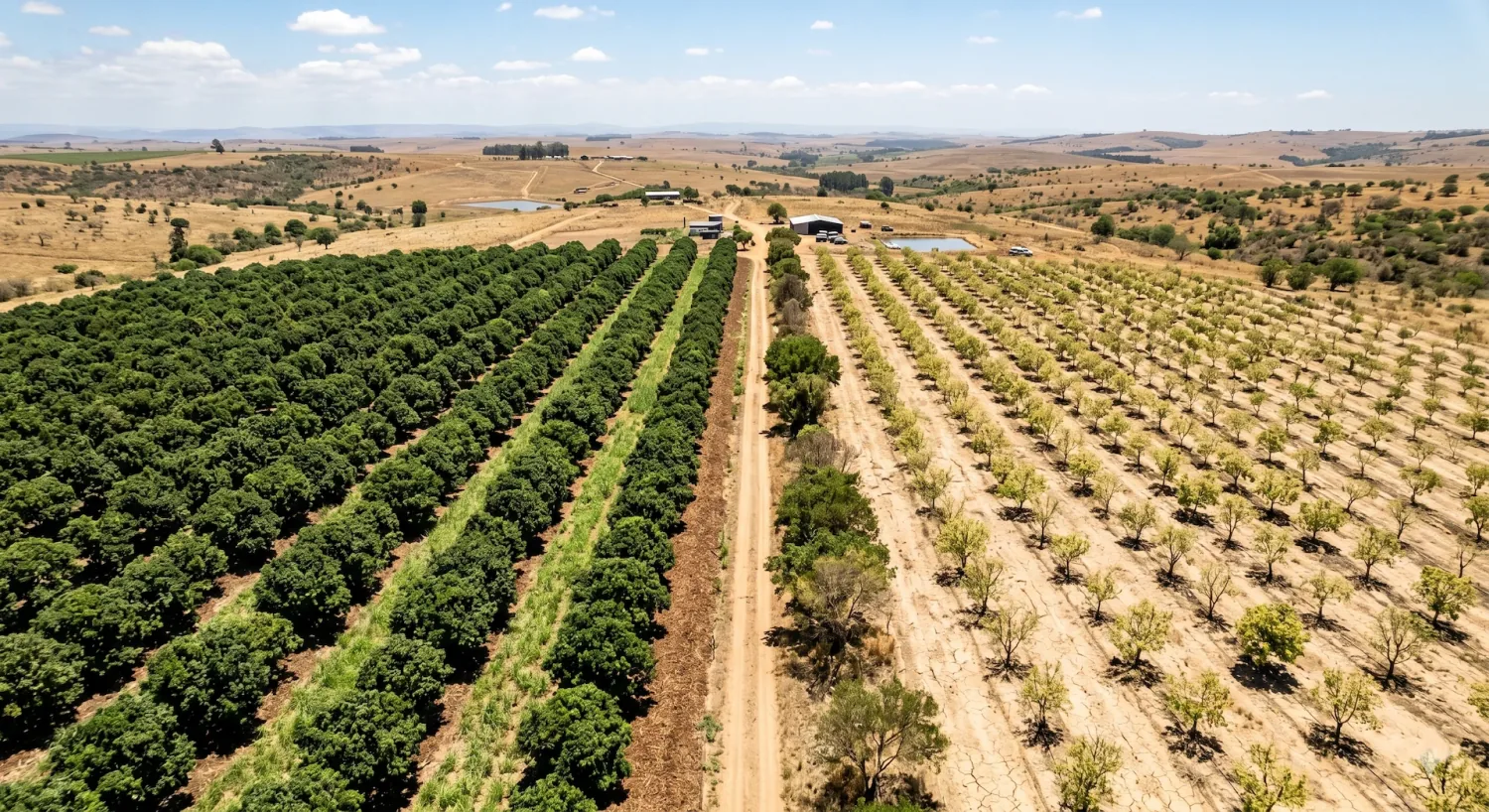
Aerial view of two adjacent orchards during drought — one with healthy canopy, one stressed
Soil Biology

Drought-Proofing Your Macadamia Orchard: How Fungal-Dominant Soils Protect Moisture and Yield

When the rains fail, the real story is underground. How the fungal-to-bacterial ratio shapes your orchard’s drought vulnerability—and what you can do about it before the next dry season.

Read Article →
Comparison of traditional soil testing versus real-time SAP analysis
SAP Analysis

SAP Analysis vs Soil Testing: What Your Trees Are Really Eating

Soil tests tell you what is in the ground. SAP analysis tells you what the plant is actually absorbing. Here is why that distinction changes everything.

Coming Soon — Subscribe ↓
The Succession Soils Method for managing regenerative transition economics
Transition Economics

The Real Cost of the Regenerative J-Curve—And How to Avoid It

A hard look at the financial economics of transitioning to regenerative agriculture, and the data-driven strategy that eliminates the yield dip.

Coming Soon — Subscribe ↓
Chart showing the correlation between F:B ratio and disease pressure in orchards
Soil Biology

Understanding the F:B Ratio: A Practical Guide for Orchardists

What the Fungal-to-Bacterial ratio actually measures, why it matters for macadamias and avocados, and how to start shifting it on your farm.

Coming Soon — Subscribe ↓
Season-by-season progress of rebuilding fungal networks and reducing input costs
Input Costs

Reducing Your Fertiliser Bill Without Reducing Your Yield

How precision SAP analysis and biological soil management allow you to cut synthetic fertiliser spend while maintaining or improving crop nutrition.

Coming Soon — Subscribe ↓
Cross-section showing the living soil ecosystem beneath an orchard
Video

How SAP Testing Works in the Orchard

A short visual walkthrough of the SAP sampling process, from leaf collection in the field to laboratory analysis and report interpretation.

Coming Soon — Subscribe ↓

The Orchardist's Guide to SAP Analysis

A practical, jargon-free PDF guide that explains how to read SAP analysis reports, identify hidden nutrient deficiencies, and turn lab data into targeted field interventions. Written specifically for macadamia, avocado and citrus growers.

  • How to read SAP reports without a science degree
  • The 5 nutrient ratios that actually matter
  • When and how to sample for accurate results
  • A sample interpretation walkthrough

We respect your privacy. Unsubscribe at any time.

Transition Cost Spec Sheet

A transparent breakdown of the typical costs and timelines involved in transitioning a commercial tree crop operation to regenerative management. Includes estimated input cost reductions over a three-year horizon based on real South African farm data.

  • Year-by-year input cost projections
  • Biological input pricing benchmarks
  • Expected ROI timeline for soil biology investment
  • Comparison: conventional vs regenerative input budgets

We respect your privacy. Unsubscribe at any time.

Monthly Soil Biology Insights

Short, practical articles on living soils, SAP analysis and orchard ecology delivered to your inbox once a month. Written for commercial orchardists, not academics.