Three products, all made from fish, all sold as the same thing. They are not. How each one is made decides whether it feeds your soil biology or just adds a shot of nitrogen — and why silage is the one that rebuilds structure, roots and the fungal balance fastest.

Growers ask me all the time which fish product actually builds soil. It is a fair question, because the label rarely tells you. "Fish fertiliser" covers three genuinely different inputs — emulsion, hydrolysate and silage — and the difference is not marketing. It comes down to how the fish was broken down, and that one choice decides whether the product feeds your soil biology or simply drops in a quick hit of nitrogen. When I say a product "builds soil faster" I mean something specific: better aggregation and infiltration, faster residue breakdown, and a shift in the fungi-to-bacteria ratio towards the fungal side where the orchard needs it.
How it is made. Fish emulsion is the cooked product. Fish is heated hard, the oil is spun off, the solids are pressed out, and what remains is boiled down into a concentrated liquid.1 The heat does the damage: most of the fragile organic compounds — the amino acids, peptides and omega oils that make fish worth using in the first place — are denatured or stripped out along the way.
What it does in the soil. What is left behind is mostly a soluble nitrogen source with an oxidised carbon fraction that microbes struggle to feed on. It greens a crop up quickly, but it does very little to build structure or microbial life. Leaned on too hard, it tends to push the soil towards bacterial dominance and can leach nitrate rather than holding it in living biomass.2 It has a place — an emergency foliar nitrogen top-up — but it is not a soil-building tool.
"Fish fertiliser" on the front of the drum tells you nothing. The word that matters is how it was made — cooked, enzyme-digested, or fermented. Cooked emulsion and living silage sit at opposite ends of what fish can do for soil, even though both are "from fish."
How it is made. A hydrolysate skips the cooker. Whole fish or fish offcuts are broken down using naturally derived proteolytic enzymes at temperatures kept below 45°C. Because nothing is boiled, the material that emulsion loses is kept intact: amino acids, peptides, omega oils, vitamins, enzymes and organic nitrogen all survive the process.3
What it does in the soil and on the plant. That preserved profile is what makes a hydrolysate a real biological input rather than just a fertiliser. In the soil it supports microbial growth and mycorrhizal fungi, lifts soil carbon and respiration, and helps nudge the microbial community back towards balance. As a foliar feed, the peptides and amino acids feed straight into chlorophyll production, improving photosynthetic efficiency and the plant's resilience under stress.4
A cold-process hydrolysate and an acid-fermented silage are exactly the kind of inputs that suit our coastline — made from marine material that would otherwise be waste. This is the product family produced by Oceanic Organics here in KwaZulu-Natal, so a quality product is available close to the farm rather than shipped in from elsewhere.
How it is made. Silage goes one step further than a hydrolysate. Raw fish is fermented with lactic acid bacteria, molasses and sea salt under anaerobic conditions. The fermentation itself breaks the proteins down into peptides and amino acids, and along the way it produces a set of organic acids — lactic, acetic and formic.5 The acidity drops the pH below 4, which naturally stabilises the product without any cooking or synthetic preservative.
What it does in the soil. The thing that sets silage apart is that it stays alive. It is a dynamic product, still carrying beneficial microbes such as Lactobacillus and Pseudomonas, plus the organic acids the fermentation made. In practice it behaves like a liquid compost for the soil: you are not just feeding the plant, you are inoculating and feeding the soil food web at the same time.
Those organic acids are not a by-product to tolerate — they are a large part of why silage works on roots. They do five distinct jobs in the root zone:
There is a hormonal angle too. The amino acids delivered by silage act as precursors the plant uses to build its own auxins and cytokinins, while the organic acids behave as natural growth regulators. Together they improve stress tolerance and chlorophyll synthesis — the plant grows with less effort and holds up better when conditions turn against it.
None of this is worth much if it does not show up in the soil. On a macadamia farm about 25 km inland from Stanger on the R74, on the North Coast of KwaZulu-Natal, fish silage was applied at 30 L/ha in two passes — April 2024 and October 2024. Soil was measured on-site with a microBiometer test, which reads both total microbial biomass and the fungi-to-bacteria (F:B) ratio in the field, so before-and-after results sit side by side.
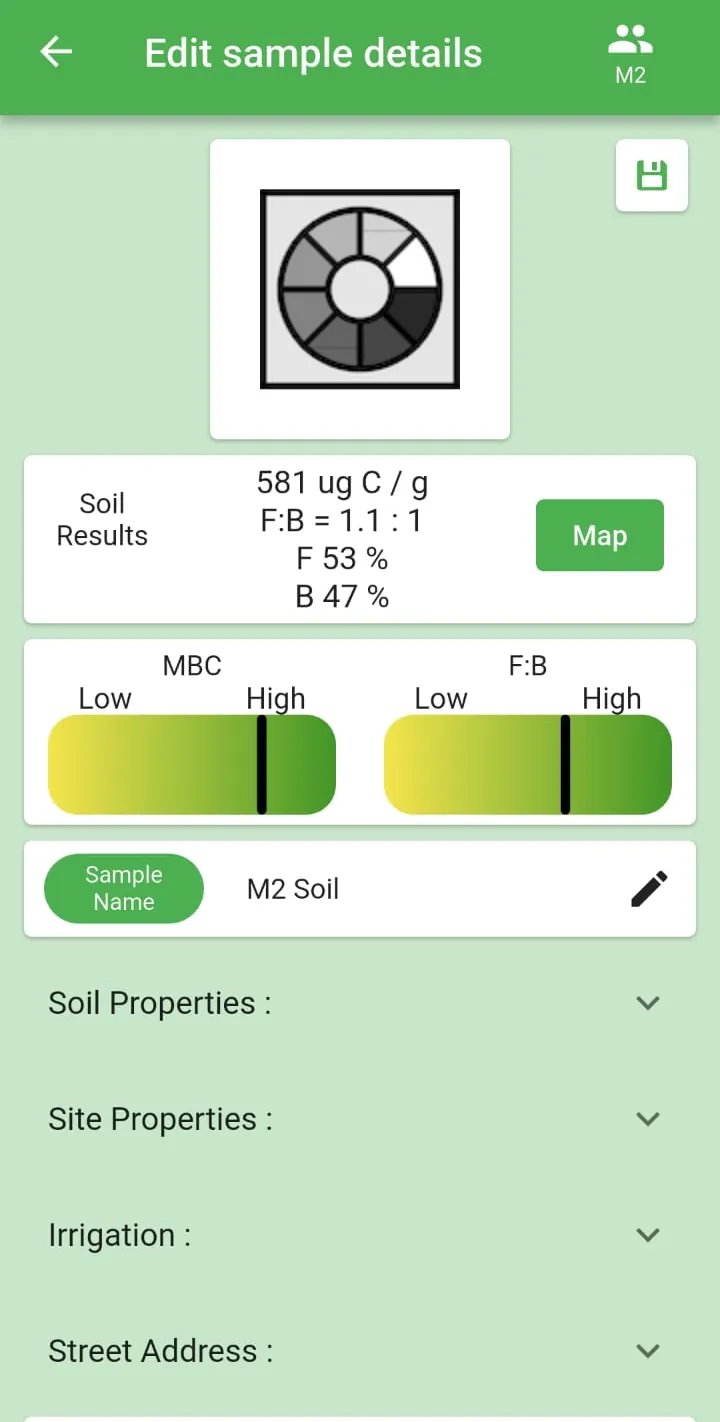
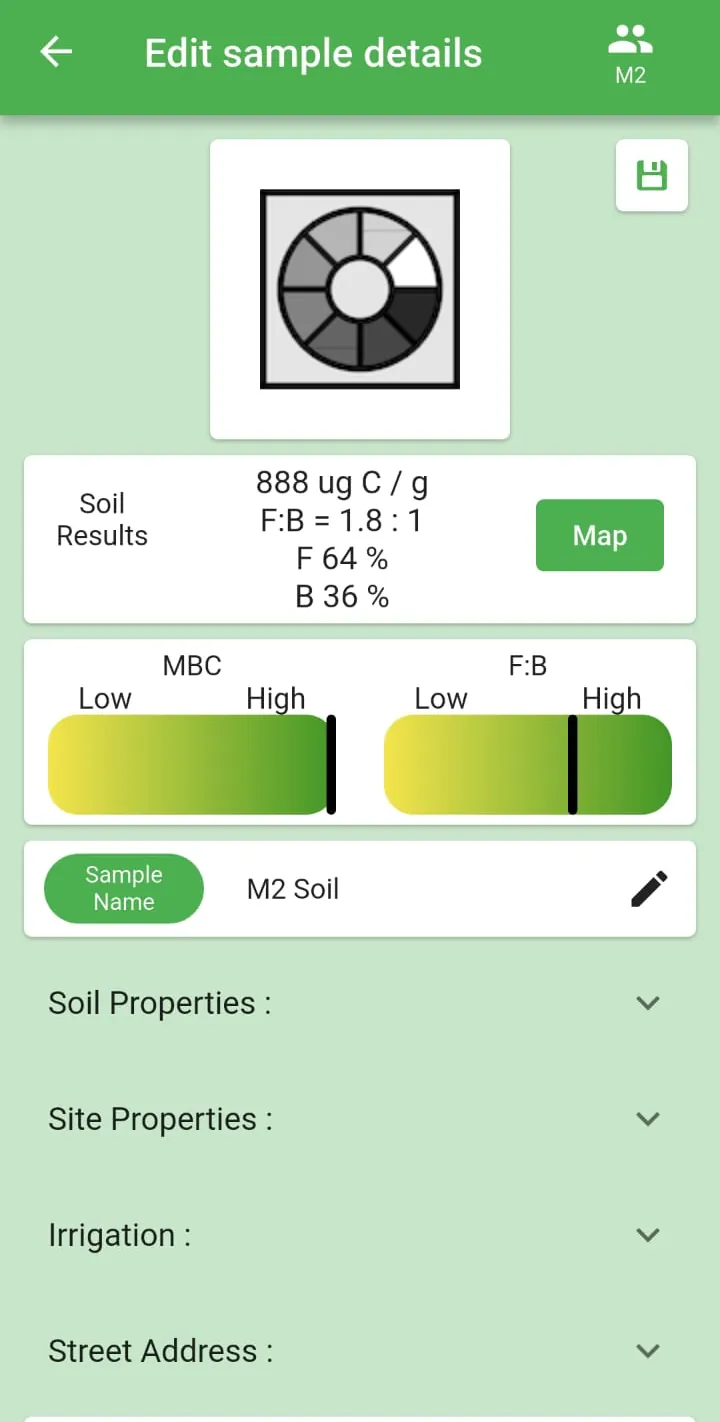
The numbers moved in exactly the direction a fungal-leaning orchard soil wants to go. Microbial biomass carbon rose from 581 to 888 µg C/g — a little over a 50% increase — while the fungi-to-bacteria ratio climbed from 1.1:1 to 1.8:1, lifting the fungal share from 53% to 64%. The point is not any single reading; it is that the change was measured on the block, not assumed from the drum.
Any input that claims to build soil biology should be provable on your own soil. Take a baseline reading before you start and re-test after a season. If the biomass and F:B ratio have not moved, the product has not earned its place — whatever the label says.
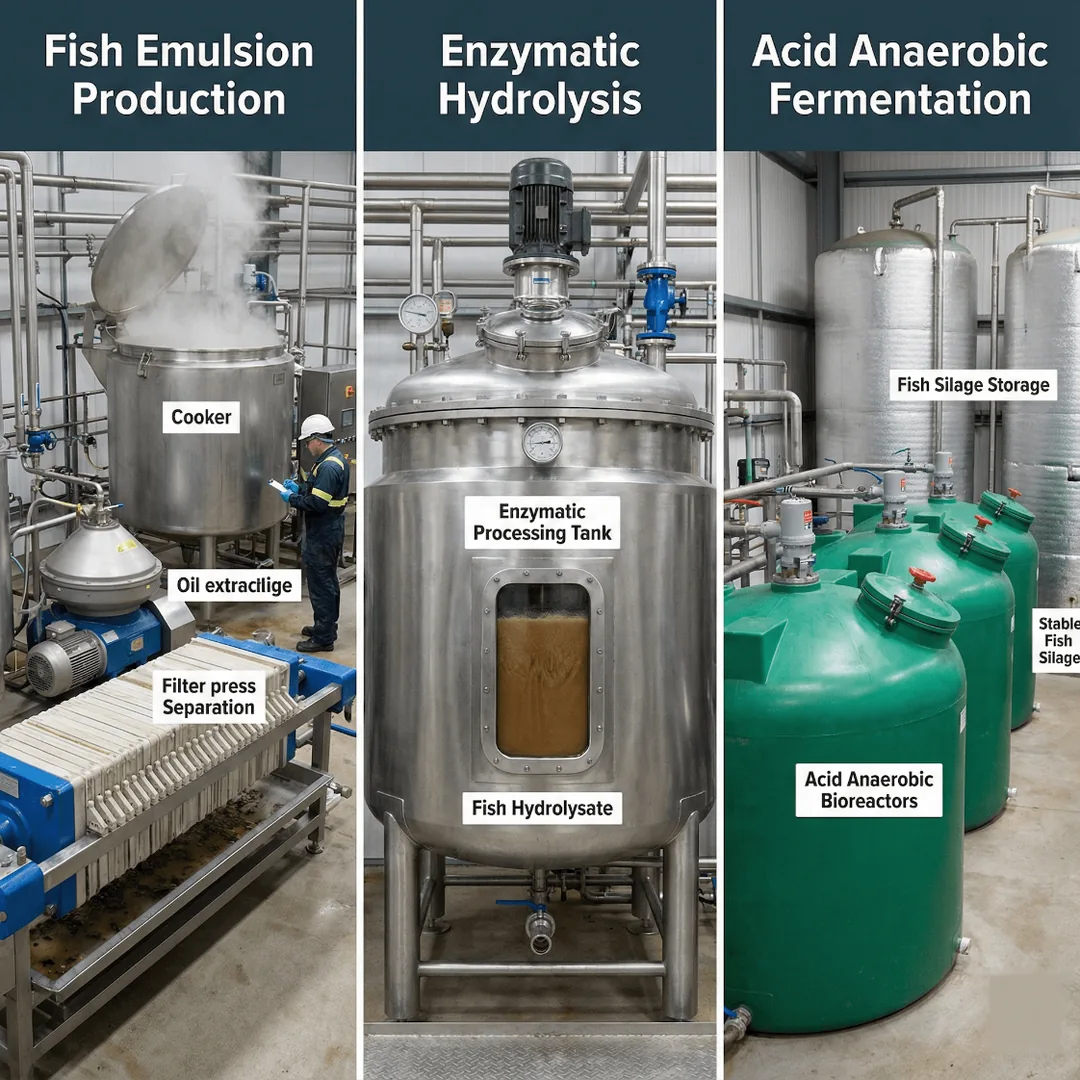
Set against each other, the three products line up cleanly from "quick nitrogen" to "living soil builder." The table below is the short version of everything above.
| Attribute | Fish Emulsion | Cold-Process Hydrolysate | Acid-Fermented Silage |
|---|---|---|---|
| Process | High-heat cook, oil & solids removed | Enzyme digestion below 45°C | Anaerobic lactic fermentation, pH <4 |
| Amino acids & peptides | Largely denatured or removed | Preserved | Preserved, plus organic acids |
| Living microbes | None | None (but feeds soil microbes) | Yes — Lactobacillus, Pseudomonas |
| Carbon for soil biology | Oxidised, low value | Moderate to high | High — a living "liquid compost" |
| Effect on soil structure | Minimal | Builds microbial life & carbon | Strongest — aggregation & F:B shift |
| Main risk | Bacterial dominance, nitrate leaching | Few | Few |
| Best use | Emergency foliar nitrogen | Balanced foliar & soil feed | Soil-building drench for regenerative programmes |
Each fish input serves a different purpose. Fish emulsion delivers quick nitrogen but has minimal biological effect, so keep it for an emergency foliar top-up. Cold-process hydrolysate provides balanced nutrition and genuinely supports microbial activity, which makes it a sound all-round foliar and soil feed. Fish silage goes a step further again: its organic acids and living microbial content transform soil biology, drive root growth and accelerate the rebuild of structure.
For a regenerative orchard aiming to restore structure, biology and resilience — the F:B ratio included — fish silage is the clear choice. It is the one product of the three that arrives as a living system rather than a nutrient, and that is what builds soil fastest. Whichever you choose, prove it on your own block: baseline first, re-test after a season, and let the soil tell you whether it worked.
No, and that is the whole point. All three are made from fish and are frequently sold as though interchangeable. How each one is processed decides whether it feeds your soil biology or simply delivers a shot of nitrogen.
Fish emulsion is quick nitrogen with little biology. Cold-process enzymatic hydrolysate is balanced and biological. Anaerobic acid-fermented silage behaves as a living liquid compost. The processing method, not the raw material, is what separates them.
Silage. The organic acids it carries drive root and plant growth, and of the three it is the one that rebuilds structure, roots and the fungal balance fastest.
Yes — a macadamia block near Stanger on the KwaZulu-Natal North Coast is described here, alongside a side-by-side comparison of the three products and a summary of which to reach for and when.
A fuller reference list of the peer-reviewed literature behind this comparison is available on request.
A fish input only earns its place if the soil biology moves. A microBiometer baseline and a SAP analysis show you where your orchard stands now, so you can choose the right input and prove it worked — instead of guessing from the label.
Book a Soil & SAP Assessment