When soil moisture disappears, so does your tree's ability to feed through its roots. Here's what actually happens inside a macadamia during a dry spell — and how to keep it nutritionally functional when the soil can't help.
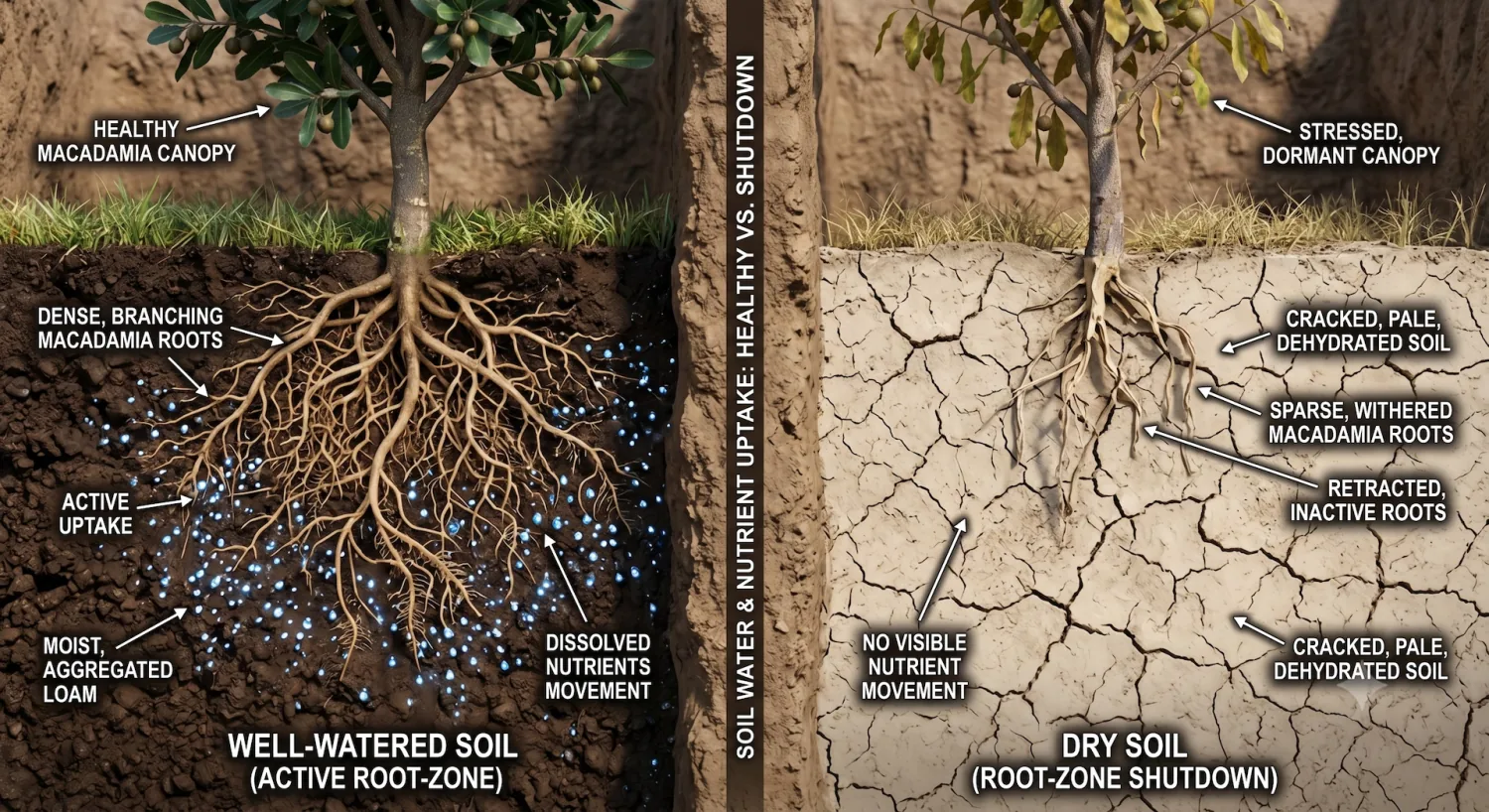
Most growers understand that dry conditions reduce yield. Fewer understand exactly why — or what is happening at the biochemical level when a macadamia tree tries to feed itself through bone-dry soil. This article works through the full picture: how nutrients normally move, what drought does to that system, how to bypass it with foliar feeding, and what can go wrong if you get the product or the timing wrong.
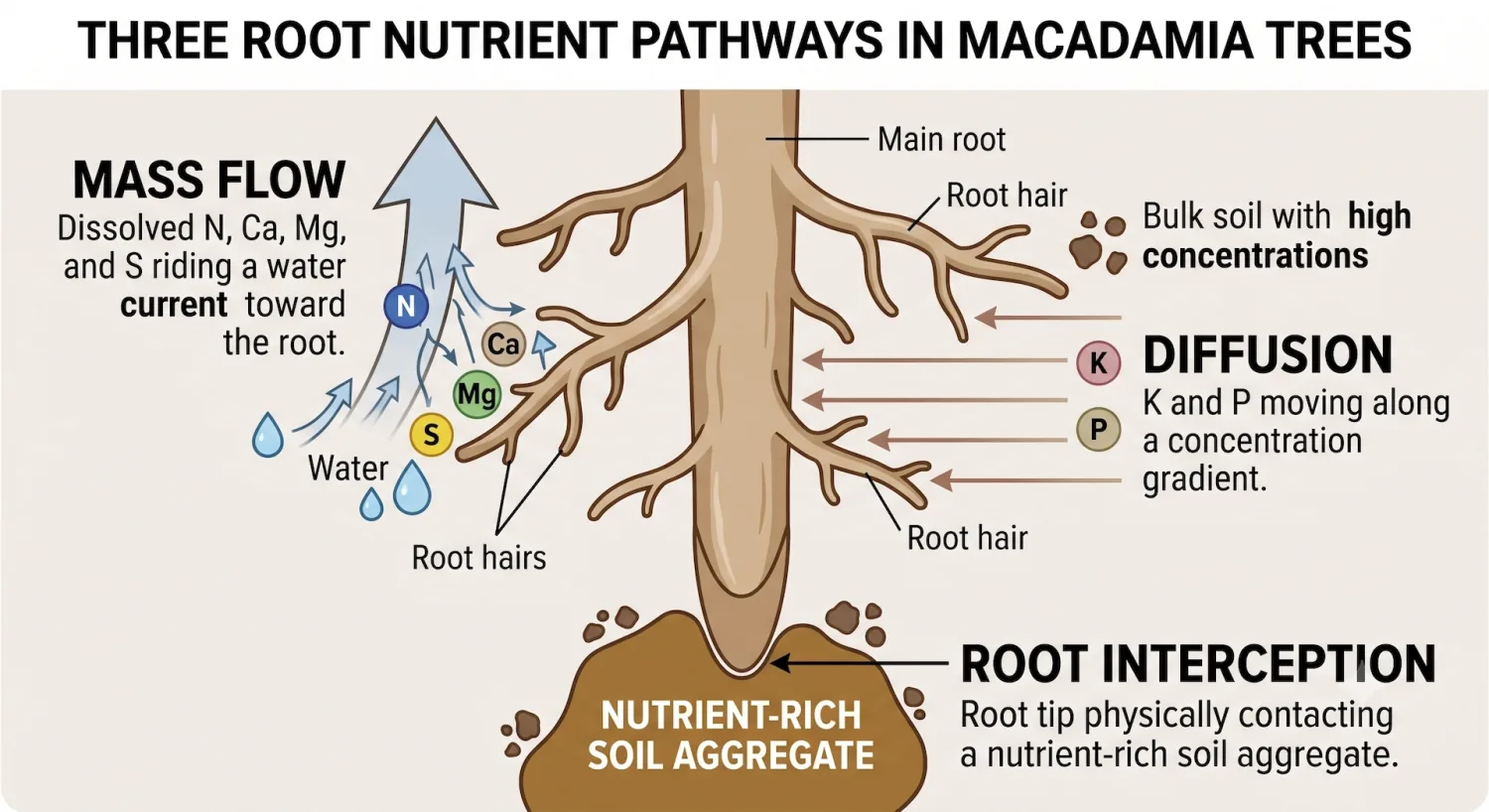
Every mineral nutrient that a tree absorbs through its roots must first dissolve in soil water. There are three ways those dissolved nutrients reach the root surface.
Mass flow is the primary workhorse. As water evaporates from the leaves, it creates a negative pressure gradient — a pulling force — that draws water upward continuously from the root zone. Nutrients dissolved in that water (nitrogen, calcium, magnesium, and sulphur) simply ride the current. No water movement means no mass flow.
Diffusion handles potassium and phosphorus. These elements move from areas of high concentration in the soil toward the root surface, which maintains lower concentrations through continuous uptake. Like a drop of ink spreading through water, movement is driven entirely by concentration difference — and it requires the soil to be wet enough for that movement to happen.
Root interception is the simplest mechanism: the roots grow physically into the soil and contact nutrient-rich zones directly.
All three mechanisms depend on water. This is the central vulnerability.
When soil moisture drops to critically low levels, the entire root-feeding system shuts down in sequence.
Mass flow collapses first. As the tree reduces transpiration to conserve internal water, the pulling force disappears. Dissolved nutrients sit locked in the dry soil with nowhere to go.
Diffusion fails next. There is not enough water in the soil pores to act as a medium for potassium and phosphorus movement. The concentration gradients that normally drive these nutrients toward roots cannot function in dry conditions.
Root interception continues in a limited way, but root extension slows dramatically as the tree conserves energy. New root growth into uncontacted soil zones is minimal.
Drought does not destroy the nutrients in your soil. It immobilises them. A tree sitting in a dry paddock may be surrounded by adequate potassium, calcium, and nitrogen — and still be starving — because the transport system that would normally deliver those nutrients has effectively stopped.
Foliar feeding applies dissolved nutrients directly onto the leaf surface. The plant absorbs them through the leaf tissue, bypassing the root system entirely. Under severe drought, it becomes the only viable nutrient delivery pathway.
There is also a real energy argument. Applying nutrients via a foliar spray requires less physiological energy than relying on root uptake, allowing the drought-stressed tree to partition its remaining energy toward survival and nut fill.5 This metabolic efficiency is a key advantage during severe water deficits, as it circumvents the heavily energy-dependent active transport mechanisms typically required to pull nutrient ions against massive concentration gradients from the dry soil solution into the root symplast.
But the leaf surface is not a passive receiver. It is a tightly regulated barrier — and drought makes that barrier considerably harder to cross.
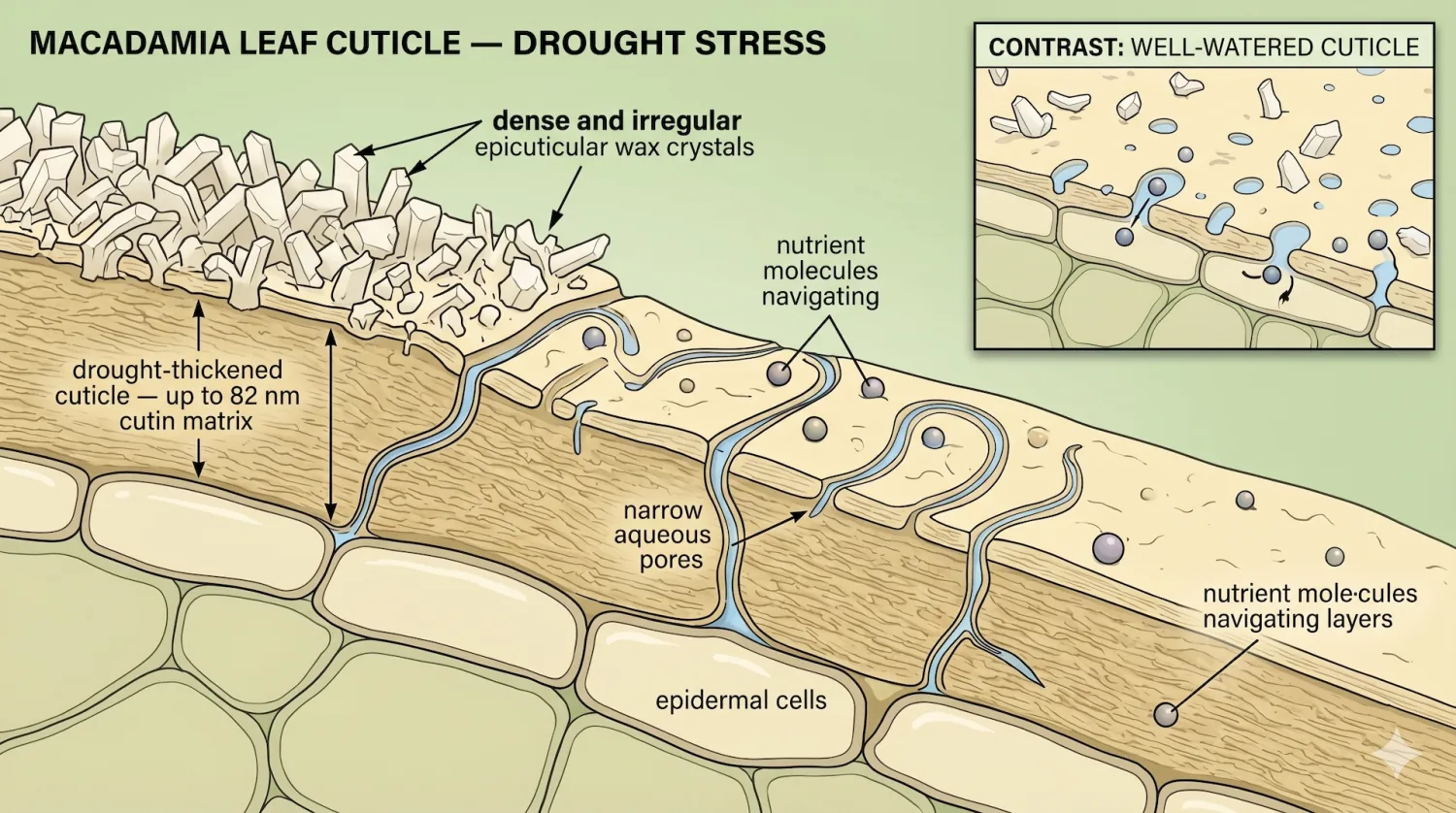
Every macadamia leaf is covered with a waxy outer layer called the cuticle. Its primary function is to prevent uncontrolled water loss through the leaf surface — a waterproof coat that keeps moisture locked inside the tree.
When the tree senses sustained water deficit, it actively fortifies its foliage by significantly thickening its cuticle and depositing complex epicuticular waxes, creating a formidable physical barrier to foliar sprays.6 Macadamia leaves are inherently highly sclerophyllous — exceptionally rigid and deeply leathery, having evolved to withstand intense sub-tropical solar radiation. This drought-induced cuticular fortification serves to prevent uncontrolled non-stomatal water loss, but it concurrently restricts the aqueous pores necessary for standard foliar fertilisers to easily penetrate the leaf tissue.
This creates a direct obstacle for foliar nutrition. Nutrient ions are water-soluble (hydrophilic), but the cuticle is oil-based (lipophilic). The only route through is via microscopic aqueous pores — tiny water channels embedded in the cuticle. As the wax thickens and pore density decreases, standard inorganic fertiliser salts dissolved in water struggle to penetrate at all.
The second pathway into the leaf is through the stomata — the tiny pores on the leaf surface that open to take in carbon dioxide for photosynthesis. Applied foliar nutrients can enter this way, condensing in the cavity beneath each stomate and being absorbed by the surrounding cells.
But drought triggers a hormonal shutdown of this pathway. As soil moisture drops and the tree's internal water potential declines, it produces increasing quantities of abscisic acid (ABA) — the primary drought stress hormone. When ABA concentrations rise, it activates ion channels in the guard cells around each stomate, causing those cells to lose their rigidity and collapse inward. The stomate seals shut.
This is the tree protecting itself from further water loss. The cost is that the second entry point for foliar nutrients is also closed.
ABA also interferes with nutrient distribution inside the leaf. While high ABA concentrations during a drought response can complicate the leaf's ability to seamlessly distribute and accumulate applied nutrients like calcium, the disruption affects internal partitioning rather than blocking entry entirely.7
A conventional foliar spray — a soluble inorganic salt dissolved in water — applied to a drought-stressed macadamia faces a thickened wax barrier with fewer entry pores and sealed stomata. The spray largely sits on the leaf surface until the water evaporates, leaving a concentrated salt residue behind. That residue then draws moisture out of the leaf cells by osmosis. The result is the crisp, brown leaf-tip burn that most growers recognise immediately as fertiliser damage.
In dry conditions, product formulation is not an optional consideration. It determines whether foliar feeding rescues the tree or damages it further.
Products such as potassium nitrate, calcium nitrate, and monoammonium phosphate (MAP) dissolved in water are the most widely used foliar inputs on commercial orchards. Under adequate moisture they work reasonably well. Under drought, they present two compounding problems: they cannot efficiently penetrate a drought-thickened cuticle, and they carry a high Salt Index — meaning the concentrated residue they leave behind after carrier water evaporates draws moisture aggressively out of leaf cells.
Three categories of product are engineered to bypass the barriers drought creates:
Nano-particulate nutrients are mineral nutrients ground to an extremely fine particle size — small enough to penetrate the restricted pores of a drought-thickened cuticle and partially closed stomata. Once inside the leaf, they are metabolised locally or transported through the plant's vascular system. Research on nano-nutrient solutions applied at 1–3% concentration under drought confirms significant improvements in plant water status, dry matter, and antioxidant enzyme activity in stressed tissue.
Amino acid chelates are nutrients bound to amino acid molecules — the building blocks of protein. The amino acid acts as a carrier that reduces the ionic charge of the mineral nutrient, allowing it to cross the hydrophobic cuticle far more readily than a bare inorganic ion can. Inside the leaf, amino acid carriers are recognised by the plant's own transport systems, speeding uptake and internal movement. By supplying essential amino acids directly to the foliage, orchard managers can dramatically lower toxic accumulations of hydrogen peroxide, thereby preserving cellular function and crop productivity during a drought. These biostimulant complexes actively upregulate the tree's antioxidant enzymes, driving down oxidative stress markers and protecting the canopy from drought-induced cellular damage.
Fish silage hydrolysate is one of the most practical on-farm sources of free amino acid chelators. When fish waste undergoes enzymatic or acid hydrolysis, its proteins break down into short peptide chains and free amino acids — glutamic acid, glycine, lysine, proline, and others. These free amino acids behave identically to synthetic amino acid chelates: they bind to mineral nutrient ions, lower their ionic charge, and allow them to cross a drought-thickened cuticle that would block a standard inorganic salt entirely. Fish silage also delivers a broad spectrum of trace minerals, natural biostimulants, and compounds that support the tree's own stress response — making it a multi-function foliar input well beyond simple nutrient delivery. Its Salt Index is low, which is a critical advantage in dry-weather applications.
Fulvic acid is a short-chain organic acid produced during the breakdown of organic matter in soil. Its most important characteristic as a foliar chelator is its extremely small molecular size — low enough to cross the cuticle independently, without needing to wait for a stomatal opening. On the leaf surface, fulvic acid binds to micronutrients (iron, manganese, zinc, copper, and boron) by surrounding the mineral ion with its organic structure, keeping it soluble and preventing it from reacting with other compounds before it can enter the leaf. Inside the tissue, fulvic acid increases cell membrane permeability, allowing the chelated nutrient to move into the cytoplasm more readily. It also carries antioxidant properties that help buffer the oxidative stress that drought conditions generate — an added benefit when the tree is already under pressure.
Sugar-alcohol chelates (complexed nutrients) use carbohydrate-based carrier molecules. These are particularly effective for calcium, boron, manganese, and zinc. Critically, they are phloem-mobile — able to move both upward and downward in the plant's vascular system — which is essential for loading nutrients directly into developing buds.
Silicon (Si) foliar sprays have been shown to significantly reduce dry matter loss at flowering and nut-fill stages under drought stress, partly by activating the tree's own physiological drought-resistance mechanisms.
Use low-Salt-Index, high-mobility, chelated or nano-formulated products. The best options in dry conditions are fish silage hydrolysate (free amino acids as natural chelators), fulvic acid (direct cuticle penetration + micronutrient chelation), amino acid chelates, sugar-alcohol complexes, and nano-particulate formulations. Standard inorganic salts are largely ineffective at penetrating drought-toughened tissue and significantly increase the risk of osmotic leaf damage. Ask your supplier for the Salt Index of any product you're considering for dry-weather application.
Drought doesn't just stop nutrients from moving. As the soil solution shrinks (less water holding dissolved minerals), the remaining solutes become more concentrated. This triggers chemical conflicts between elements that would coexist without friction in a well-watered soil.
When a plant absorbs nitrogen in the ammonium form (NH₄⁺), the root extrudes hydrogen ions (H⁺) into the surrounding soil to maintain electrical balance inside the root cells. This acidifies the immediate root zone. In a well-watered soil, adequate buffering capacity absorbs this acidification. In a dry soil with less moisture to buffer pH shifts, the acidification becomes aggressive.
The excess hydrogen ions, combined with high ammonium concentrations, compete with calcium (Ca²⁺) and magnesium (Mg²⁺) for uptake sites on the root surface. The practical outcome: relying on soil-applied ammonium nitrogen during a dry period actively induces calcium and magnesium deficiency in the canopy.
For macadamia, this is serious. Calcium deficiency compromises shell development and root structure. Magnesium sits at the centre of every chlorophyll molecule — deficiency restricts photosynthesis at its most fundamental level. When there is not enough soil moisture to move corrective amendments like gypsum to the root zone, foliar calcium and magnesium applications become the only rescue pathway.
Iron and manganese compete with each other in the soil and within the plant. In dry, acidic soils, manganese (Mn) becomes excessively soluble. High manganese levels then block an enzyme called ferric chelate reductase — the enzyme roots use to acquire iron (Fe). Iron deficiency follows, showing as interveinal chlorosis (yellow leaves, green veins).
The seesaw tips the other way in soils with very high iron: iron outcompetes manganese during the limited mass flow that still operates, producing a severe secondary manganese deficiency that disrupts multiple enzyme systems in the tree.
In both cases, correcting the soil chemistry is impossible without water as a carrier. Only targeted foliar sprays using sugar-alcohol or amino acid chelated forms of the deficient element can deliver nutrition directly to leaf tissue.
| Antagonism | Primary driver in dry soil | Effect on macadamia | Foliar bypass |
|---|---|---|---|
| NH₄⁺ vs Ca²⁺ / Mg²⁺ | Rhizosphere acidification & cation competition for root channels | Weak shell, poor root structure, interveinal chlorosis | Foliar Ca (CaCl₂ or Ca-chelate) and Mg sprays |
| Excess Fe vs Mn | Iron outcompetes Mn during limited mass flow | Severe Mn deficiency disrupting enzyme activity | Sugar-alcohol chelated Manganese foliar spray |
| Excess Mn vs Fe | Mn blocks ferric chelate reductase enzyme | Iron-deficiency chlorosis, halting chlorophyll synthesis | Nano-particulate Iron or Iron-EDTA foliar spray |
The weeks immediately after the last nut is picked represent the most important nutritional window in the macadamia calendar. The tree has depleted its carbohydrate, macronutrient, and micronutrient reserves during nut fill and oil accumulation. Recovery must happen — but carefully.
The risk at this stage is an ill-timed vegetative flush. Flowers are initiated months before they open. If post-harvest nitrogen stimulates a burst of new leaf growth, the tree directs energy away from bud initiation — compromising next season's crop before the season has even started.
Post-harvest soil nitrogen is therefore strictly managed. The guideline is clear: apply soil nitrogen only if leaf tissue analysis confirms nitrogen below 1.2%, or if the orchard produced an exceptionally heavy crop exceeding 4 tonnes per hectare. In all other cases, it creates more risk than it solves.

Zinc and boron are the two micronutrients that post-harvest foliar programmes are built around. Both are heavily exported in the harvested nuts. Both are poorly mobile within the plant — the tree cannot redistribute them from older leaves to new growth. They must be resupplied from outside.
Boron is essential for flower development, pollen tube growth, and successful nut set. A single season without adequate post-harvest boron replacement can noticeably reduce the following season's set.
Zinc is required for the synthesis of auxins — the growth hormones that regulate internode elongation and floral structure. Zinc deficiency causes the characteristic "little leaf" formation and structurally compromised flower buds that growers sometimes attribute to other causes.
Applying both elements as post-harvest foliar sprays allows them to load directly into the bud tissue that will break dormancy the following spring. Foliar delivery also sidesteps the soil-level lockouts — high phosphorus or elevated pH — that routinely make zinc unavailable at the root. Liquid zinc complexes combined with sugar-alcohol boron are the standard post-harvest protocol.
Magnesium sits at the centre of every chlorophyll molecule. Post-harvest magnesium foliar applications keep the mature leaves running at full photosynthetic efficiency through the cooler winter months, maximising carbohydrate accumulation in the trunk and roots before the heavy energy demands of spring flowering arrive.
Advanced protocols also incorporate energy foliar sprays — blends of trace elements with magnesium and carbohydrate-based carriers — designed to rapidly restore the depleted energy reserves that the reproductive season consumed.
Any foliar application in dry conditions carries a higher risk of causing chemical damage to the tree — known as phytotoxicity. This presents as leaf-tip necrosis (brown, crisp burn), marginal chlorosis (yellowing at leaf edges), leaf cupping, or premature defoliation.
The root cause is osmotic shock: concentrated spray residues left on the leaf surface after carrier water evaporates draw moisture out of the leaf cells. In a drought-stressed tree with low internal water reserves, this happens faster and causes more severe damage than under normal conditions.
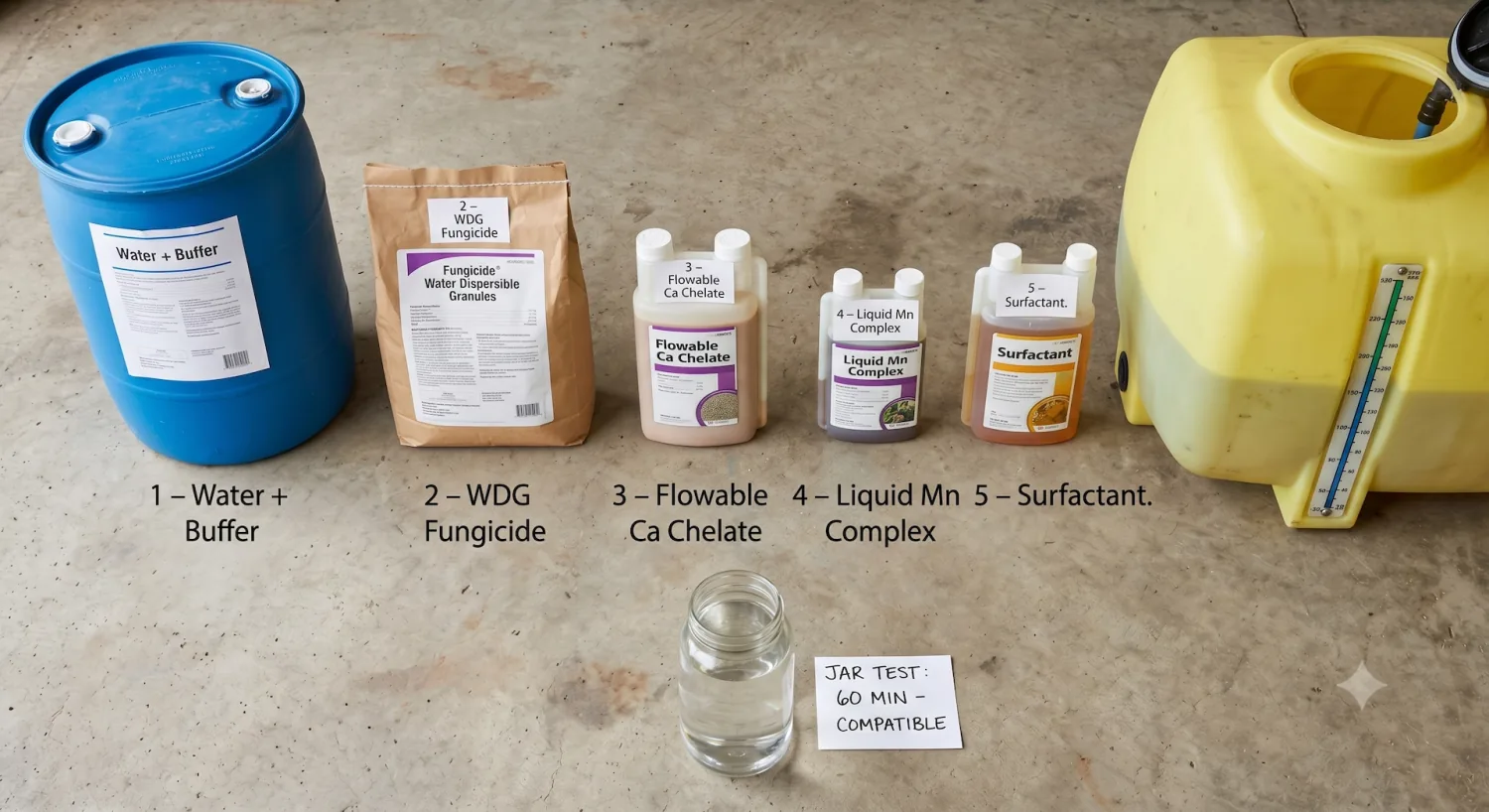
Growers routinely combine foliar fertilisers with fungicides or insecticides to reduce the number of spray passes. This is practical, but it introduces the risk of physical incompatibility — products reacting in the tank to form precipitates, gels, or clumps that block nozzles and cause uneven, damaging application.
| Step | What goes in | Why this order |
|---|---|---|
| 1 | Clean water (first 50% of volume) + pH buffer or conditioner | Establishes the suspension base; neutralises hard-water bicarbonates that cause nutrient lockup in the tank |
| 2 | Dry formulations — wettable powders (WP), water-dispersible granules (WDG) | Need maximum agitation and water volume to dissolve the complex crystal structure fully |
| 3 | Liquid suspensions and flowables | Disperse readily once the dry materials are fully dissolved and the base is conditioned |
| 4 | True liquids and chelates (emulsifiable concentrates) | Highly soluble elements that integrate smoothly without causing prior components to precipitate |
| 5 | Surfactants and adjuvants | Added last to reduce surface tension without inducing excessive foaming during agitation |
Before mixing a commercial-scale batch, always run a jar test: combine the intended products at working ratios in a small jar and observe for 60 minutes. Look for sediment forming, heat generation, or phase separation. If any occur, do not use that combination.
A tank mix can remain perfectly stable in the jar and still damage the crop on the leaf. Horticultural oils or certain fungicides — such as chlorothalonil — combined with inorganic nutrient salts can strip the protective wax from the leaf surface. For a drought-stressed macadamia already managing a compromised cuticle, this combination can cause catastrophic damage. Confirm agronomic compatibility with your agrochemical supplier before mixing, not after.
The general principles above apply across macadamia-producing regions. KwaZulu-Natal introduces specific variables that modify how and when those principles should be applied.
Macadamia floral initiation requires a meaningful drop in ambient temperature. The tree uses this signal to transition buds from vegetative to reproductive mode. KZN experiences warmer-than-normal autumn conditions with increasing frequency, delaying or disrupting this transition.
When flowering is erratic and asynchronous across the block, a single post-harvest boron and zinc application timed for an average stage date may miss the critical window for a proportion of the trees. If warm autumn conditions coincide with below-average rainfall, trees enter the floral initiation phase both nutritionally depleted and water-stressed — compounding every foliar absorption problem this article describes, at precisely the moment when those sprays are most critical.
Higher humidity on the KZN North Coast reduces the vapour pressure deficit (VPD) — the drying pull between the leaf surface and the surrounding air. Trees under lower transpirational demand invest less energy in building thick shells. The result is thinner shells and higher kernel recovery percentages compared to the cooler, drier South Coast.
The trade-off: higher humidity creates ideal conditions for fungal pathogens. Fungicides become a routine component of the foliar programme on the North Coast, adding compatibility complexity and wax-stripping risk to every tank mix.
The most effective long-term protection against drought-induced nutritional failure is a soil that retains water in the first place. Integrated Orchard Management (IOM) practices — building organic matter, improving soil structure, maintaining understorey cover — have been shown to reduce surface water run-off by approximately 70% and retain around 7 tonnes of topsoil per hectare per year compared to conventionally managed blocks.8
An orchard with better infiltration and water-holding capacity enters every dry spell with more moisture in reserve, reducing the frequency and severity of the nutritional emergencies this article addresses.
Emergency foliar feeding is a management tool. It is not a strategy. The goal is a soil system capable of delivering nutrients through the roots for most of the season — and a foliar programme that steps in precisely when the soil cannot. Understanding when the roots are functioning and when they're not is the starting point for building that programme intelligently.
When soil dries out, the three mechanisms that move nutrients toward roots — mass flow, diffusion, and root interception — all degrade or stop. At the same time, the tree's drought responses (a thickened waxy cuticle, closed stomata, elevated ABA) make the leaf surface a harder barrier to penetrate. Concentrated rhizosphere chemistry creates new antagonisms between elements that never conflict in a well-watered root zone.
Foliar feeding is the correct response. But only when the product formulation matches the conditions. Fish silage hydrolysate, fulvic acid, amino acid chelates, sugar-alcohol complexes, and nano-particulate nutrients cross drought-toughened leaf tissue effectively. Standard inorganic salts largely cannot — and in dry conditions, they are more likely to cause damage than to deliver nutrition.
Apply in the cool of the day. Split applications to no more than 2 quarts per acre per pass, with 7–14 days between them. Follow the correct tank-mixing sequence. Run a jar test before any large batch. And build the soil beneath your feet so the roots can do the primary work — leaving foliar feeding to do what it was designed for: precision nutrition delivery when the root zone cannot.
Nutrients reach a root dissolved in soil water, carried by mass flow and diffusion. When soil moisture falls, that transport stops. The nutrient is still present in the soil and will still show up on a soil test, but it cannot move to the root surface. The tree is not short of nutrients so much as cut off from them.
That is the right instinct, but drought builds two walls against foliar uptake. The leaf thickens its wax layer to conserve water, which is a physical barrier to anything landing on it. Then abscisic acid closes the stomata, shutting the second route in. Foliar feeding in dry conditions works only if the product is built to get past both walls.
Standard inorganic salts. On a thickened wax layer they sit on the surface rather than penetrating, and they carry a real scorch risk on an already stressed leaf. Formulations designed for dry conditions are the ones that address wax penetration and do not depend on open stomata.
Yes. Dry soil shifts the balance between nutrients competing for the same uptake pathways — ammonium against calcium and magnesium, and the iron–manganese seesaw. A drought can therefore produce a genuine deficiency in a nutrient your soil test reports as adequate.
It is the most critical period covered here. The tree is rebuilding reserves for next season rather than filling this season's crop, and zinc and boron are non-negotiable inputs in that window. Missing it costs you next season's flowering, not this season's yield.
A soil health assessment gives you a clear picture of your root zone's capacity to feed your trees — and where it will fail first under moisture stress. Book yours before the dry season arrives, not after the symptoms appear.
Book a Soil Health Assessment